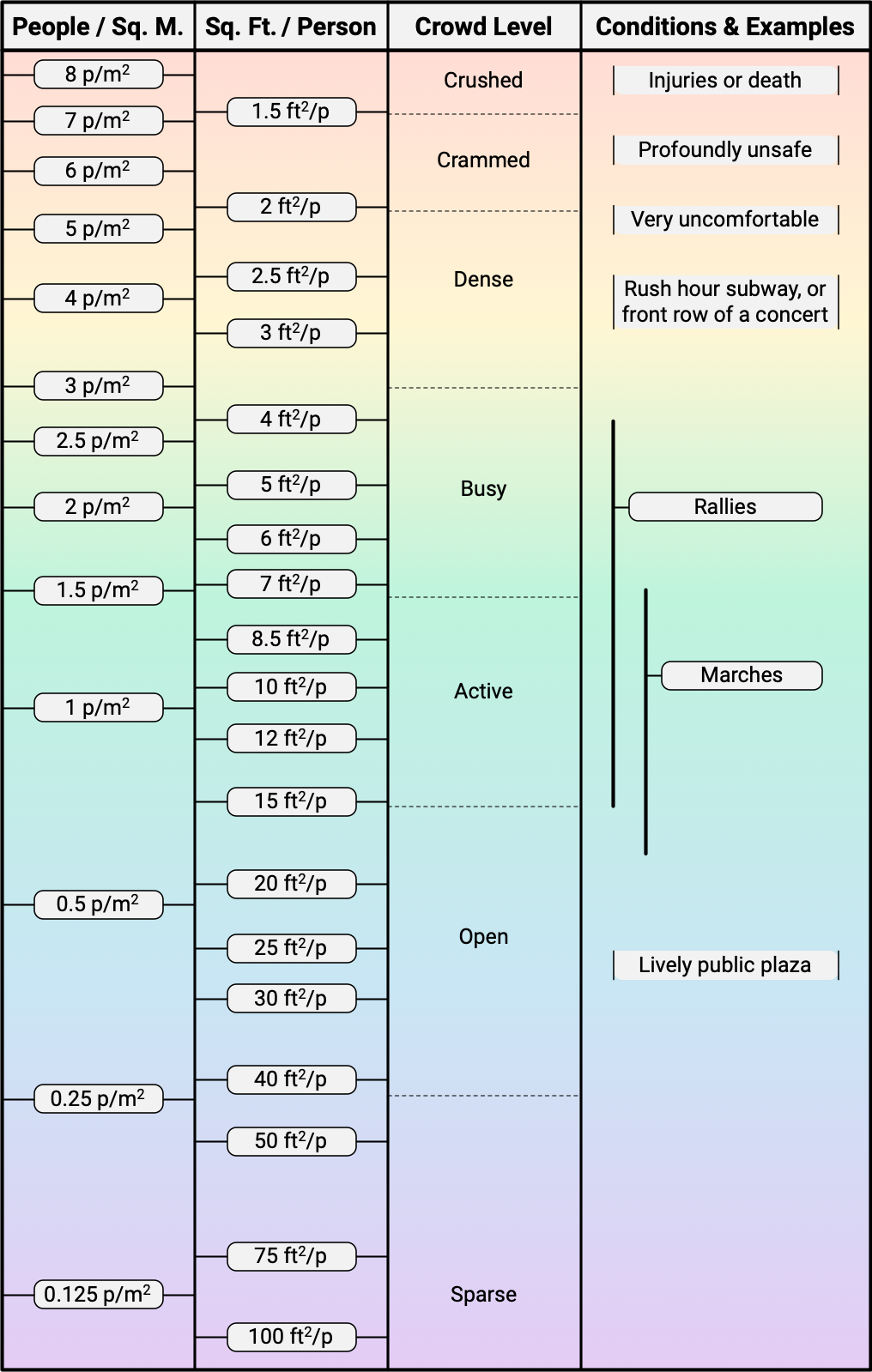
Crowd density is the multiplier that relates participant turnout and square footage.
It’s routine for organizers to overestimate crowd sizes. There’s no upside in publicly arguing about turnout, but it’s useful for the teams responsible for managing logistics to have a realistic understanding of the numbers involved.
Finding Density Measurements
It’s very difficult to find good crowd-density numbers for contemporary political events, so I’ve been attempting to gather data by finding overhead images of rallies and marches in NYC and manually counting heads, then dividing them by square footage values estimated based on local landmarks such as street widths and the locations of specific storefronts visible around the edge of the image.
The numbers in this document reflect my analyses and shouldn’t be taken as authoritative — but I’m sharing them because they’re the best data I’ve been able to come up with.
(If other folks have good overhead images of protest crowds here in New York that they’re willing to share, or have their own measurements of crowd density at similar mass events, please get in touch!)
Rallies
A busy rally or crowd waiting to begin marching is generally around five to ten square feet per person (or one to two people per square meter).
The densest portions of a rally crowd can be as much as twice as crowded, perhaps three square feet per person (or three people per square meter), comparable to the front row of a concert — but this is not common, and generally only applies in a small area closest to the speaker’s podium or other center of attention. The outer edge of the crowd often trails off into a loose penumbra that is much less dense, and when you average those areas together, the overall density will rarely be much tighter than five square feet per person, and often less.
Marches
A protest march or informal parade is typically around ten to twenty square feet per person (or half to one person per square meter).
A slow moving crowd will often be denser, while a march that is moving faster will be spread out more, or have gaps between clusters or contingents.
Estimating Crowd Size By City Blocks
For marches in Manhattan, you can take advantage of the standard size of city blocks:
- A city block between numbered streets averages 264 feet (260 feet for standard side-streets, alternating with 300 feet for the occasional larger cross street) — when making quick estimates I round this off to 250 feet. (Some short blocks downtown can be 10–20% smaller; long blocks crosstown are between 2x and 4x a short block, typically around 3.5x.)
- When marching in the street, traffic lanes are generally about 10 feet wide (varying between 10–12 feet, but I round down because people generally don’t fill the edges closest to the curb).
- A traditional midtown avenue typically has four travel lanes, not counting parking lanes, although note that many avenues are now narrower than this, thanks to bike lanes and traffic-calming measures). Cross-town streets often have just one travel lane, but major cross streets often have four.
Based on those numbers, you can make quick estimates as follows:
- If the crowd is marching, it’s probably somewhere around ten square feet per person, which we can divide by a ten foot lane width to get about one marcher per linear foot per lane — yielding approximately 250 people per lane per short block, or around 1,000 people per block for a four-lane avenue.
- If the crowd is stationary and packed in — for example, if folks are lining up behind the front banners in preparation for marching — the crowd could be as much as twice as dense, suggesting a maximum of 2,000 people per block for a four-lane avenue.
Reference Scale
March Examples
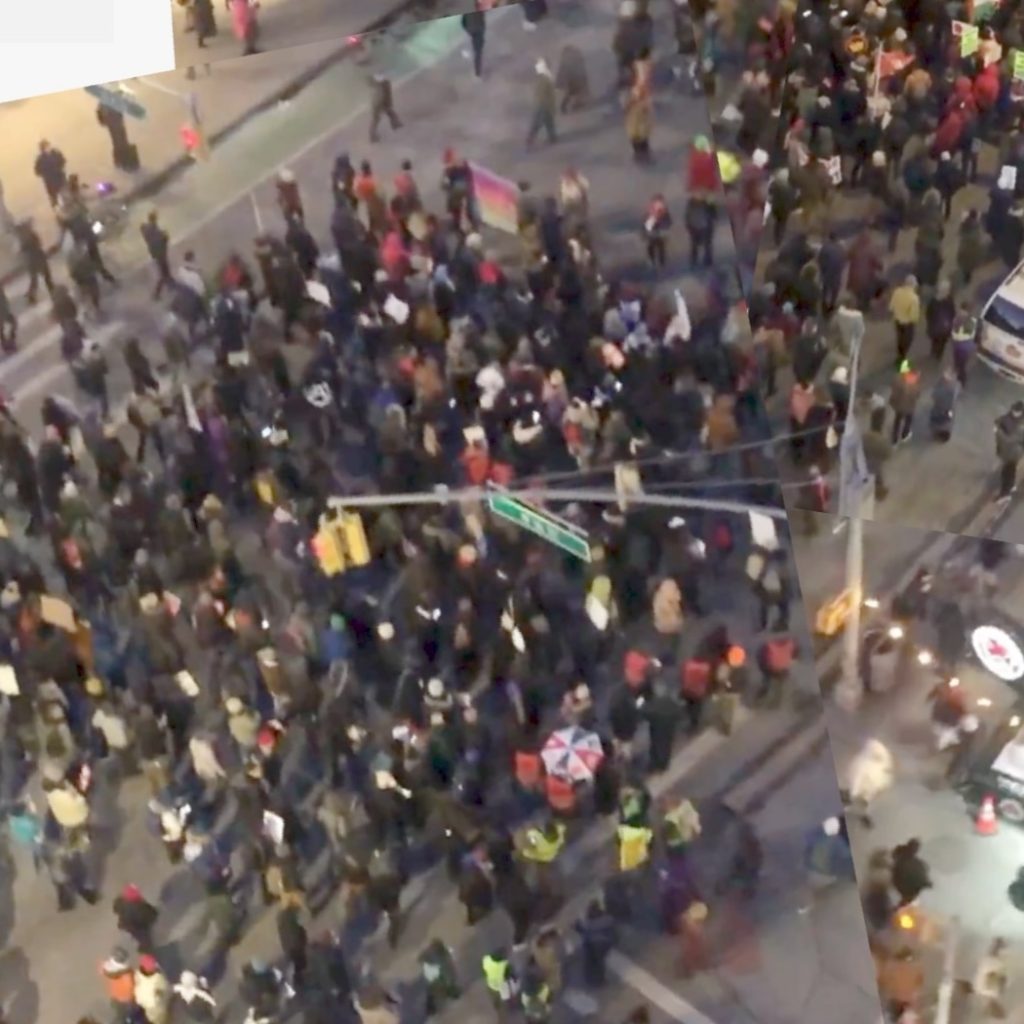
- March 28, 2026 “No Kings 3” — A slow-moving march led by RAR marshals. 7.5 square feet per person in the area right behind the front banners, shifting to 9–10 further back.
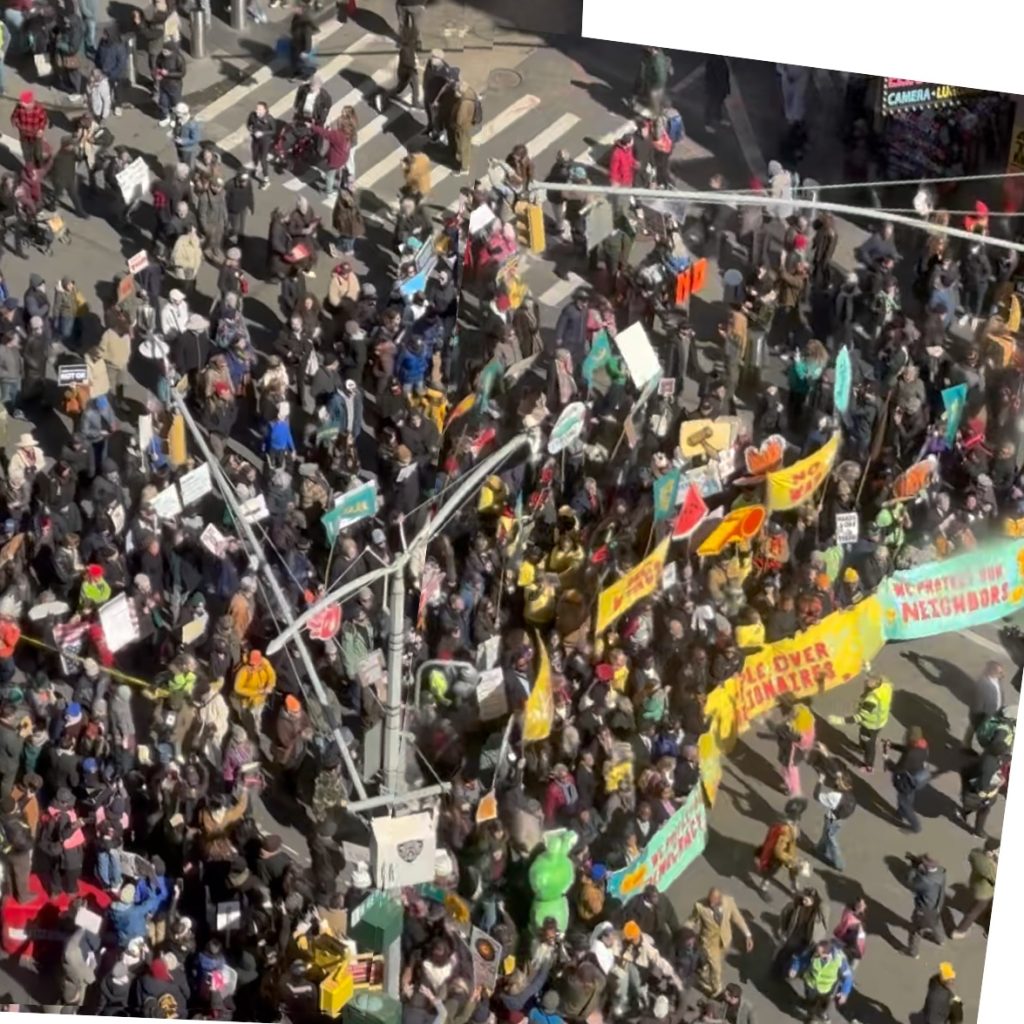
- A second view of No Kings 3 — in the middle of the march, around 10 square feet per person.
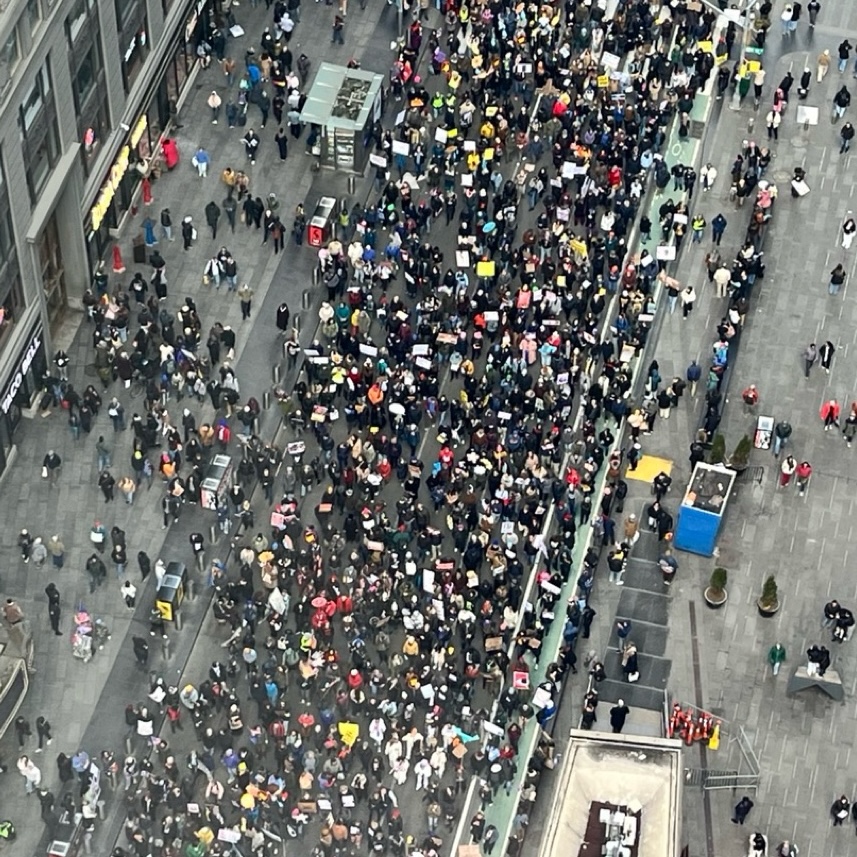
- January 11, 2026 “No Wars, No Kings, No ICE” — around 10 square feet per person; slow-moving march led by RAR marshals.
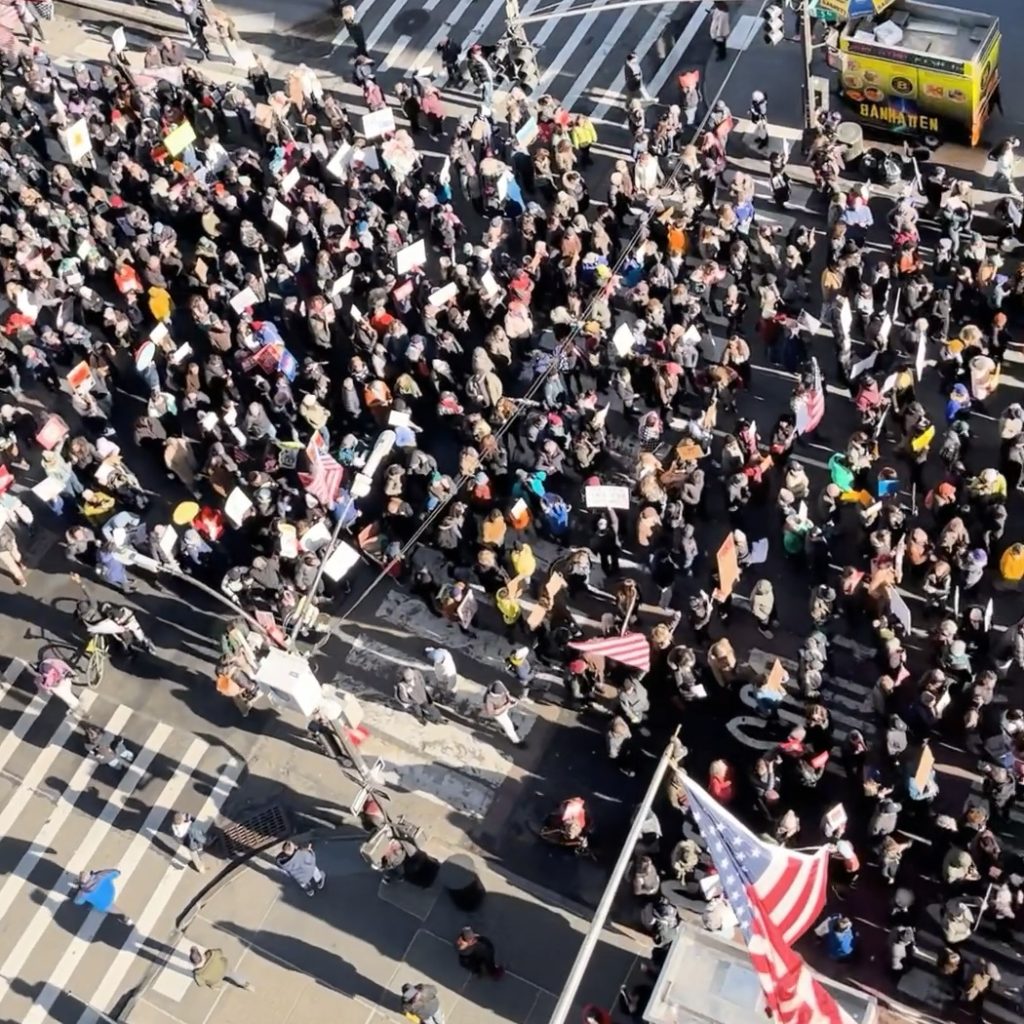
- February 28, 2026 “Iran Attack Rapid Response” — around 13 square feet per person; faster-moving march led by PSL.
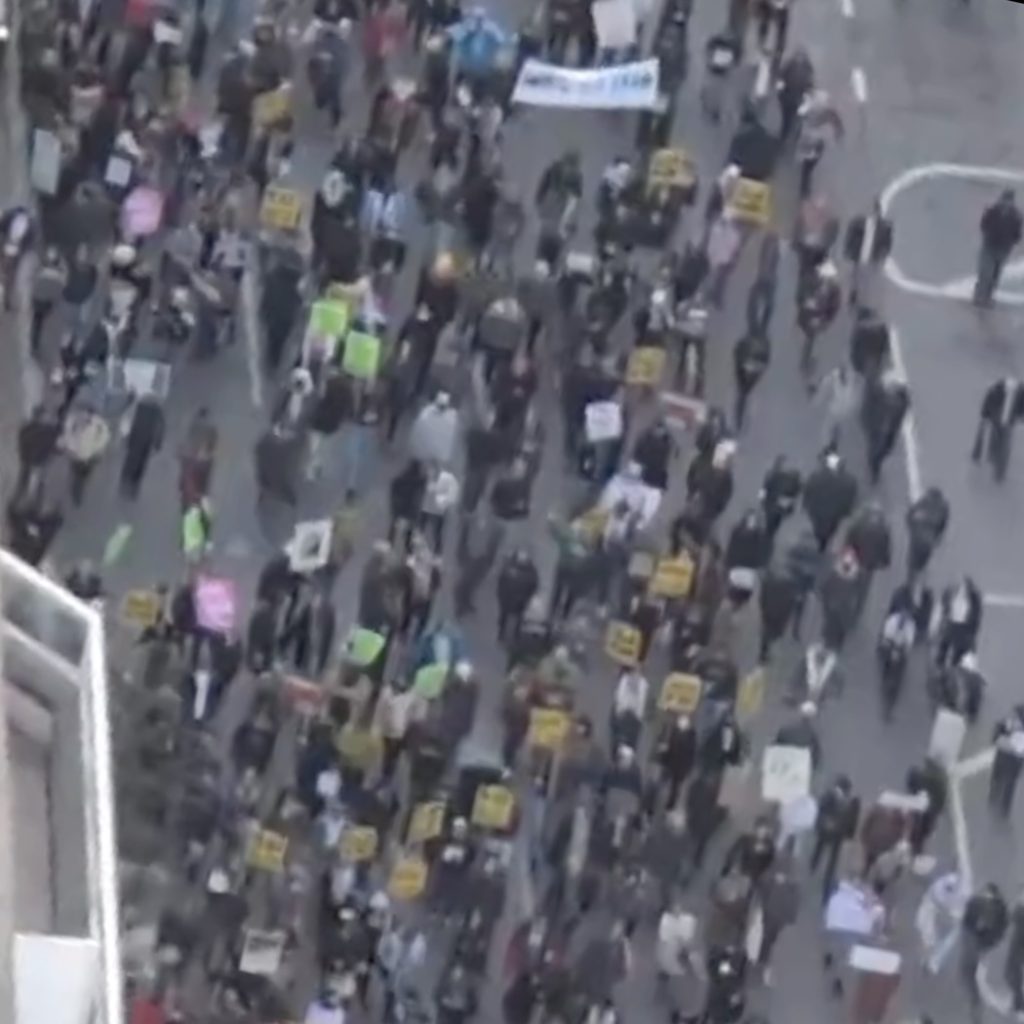
- January 23, 2026 “ICE Out For Good” — around 17 square feet per person; the central portions are around 12 ft2/p, but there are gaps between contingents and around the sides of the street, due in part to the need to maneuver around occasional parked cars and an active bike lane, and with the crowd still filling in after turning a corner from narrower street onto a wider avenue a few blocks earlier.
Leave a Reply