Author: We Will Win

  • Tactic: Off-Site Comms

    Challenge:

    When coordinating a large team at an action via mobile text chat, there may be hundreds of messages per hour — but it is hard to focus on both a smartphone screen and the surrounding action, and team members on the ground are likely too busy to read all of the messages, and important messages can be overlooked.

    Therefore:

    Station a couple of team members off-site, in a comfortable location with full-size devices and reliable network access, and give them access to all of the relevant communications channels. These folks can answer questions, route messages to relevant people or channels, and post announcements that need to be seen widely.

    History:

    We stumbled onto this tactic in 2025 while working on Good Trouble and No Kings, but it’s been independently explored by others; for example, a number of BLM actions used off-site comms in 2020–21.

    Discussion:

    To increase information flow between the off-site comms team and the action leads, they can be on a live voice call during the course of the action. This allows the on-site action leads to keep their phones in their pockets, while still ensuring they’re kept informed of relevant chat activity, and allowing them to request the posting of announcements at the appropriate moments.

    The off-site comms role is described above as a part of large actions with dozens or hundreds of team members, but it can also be useful in small but potentially-intense actions, such as ICE watch or rapid response. In such cases, the off-site comms person may be idle for most or all of an action, but is available to act as a bridge to call for backup from local or regional chats if things suddenly escalate.

    The off-site comms team doesn’t need to be located near the action — they could be a thousand miles away — but they do need to understand the geography of the area so that when people mention locations or landmarks, they have a clear picture of where things are happening. Studying a map might be sufficient, but actual time on those streets is better.

    It helps if the off-site comms team has a written description of the action — either informal notes or a detailed action plan — including locations and schedules. (In practice, the action might well diverge from the plan, but it’s still a useful reference.)

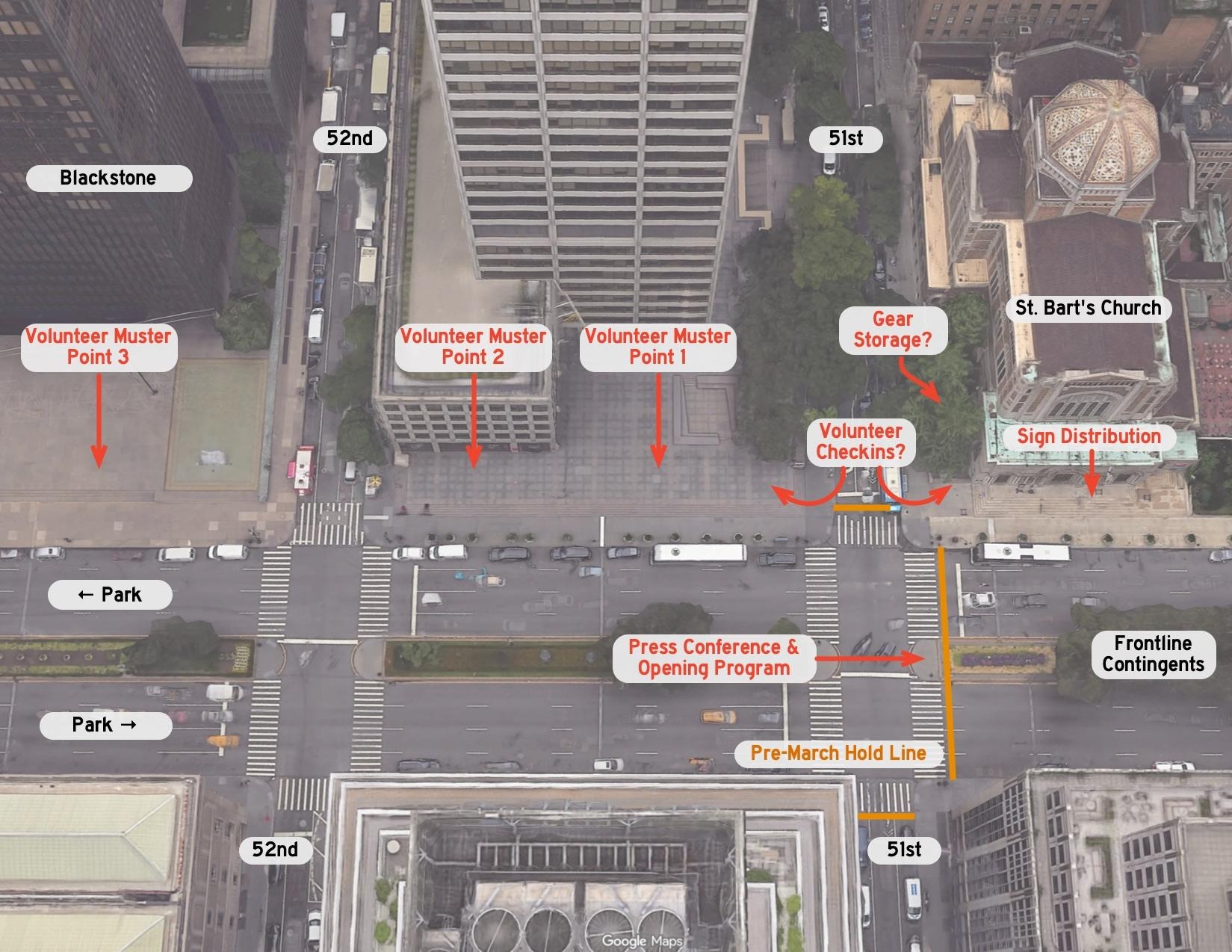
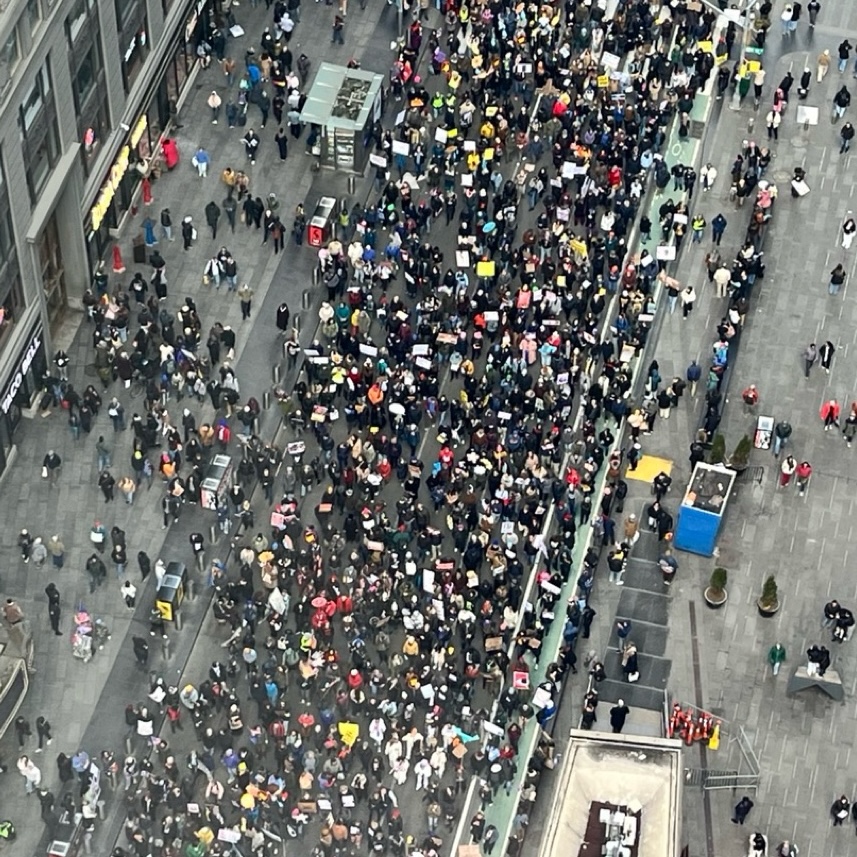
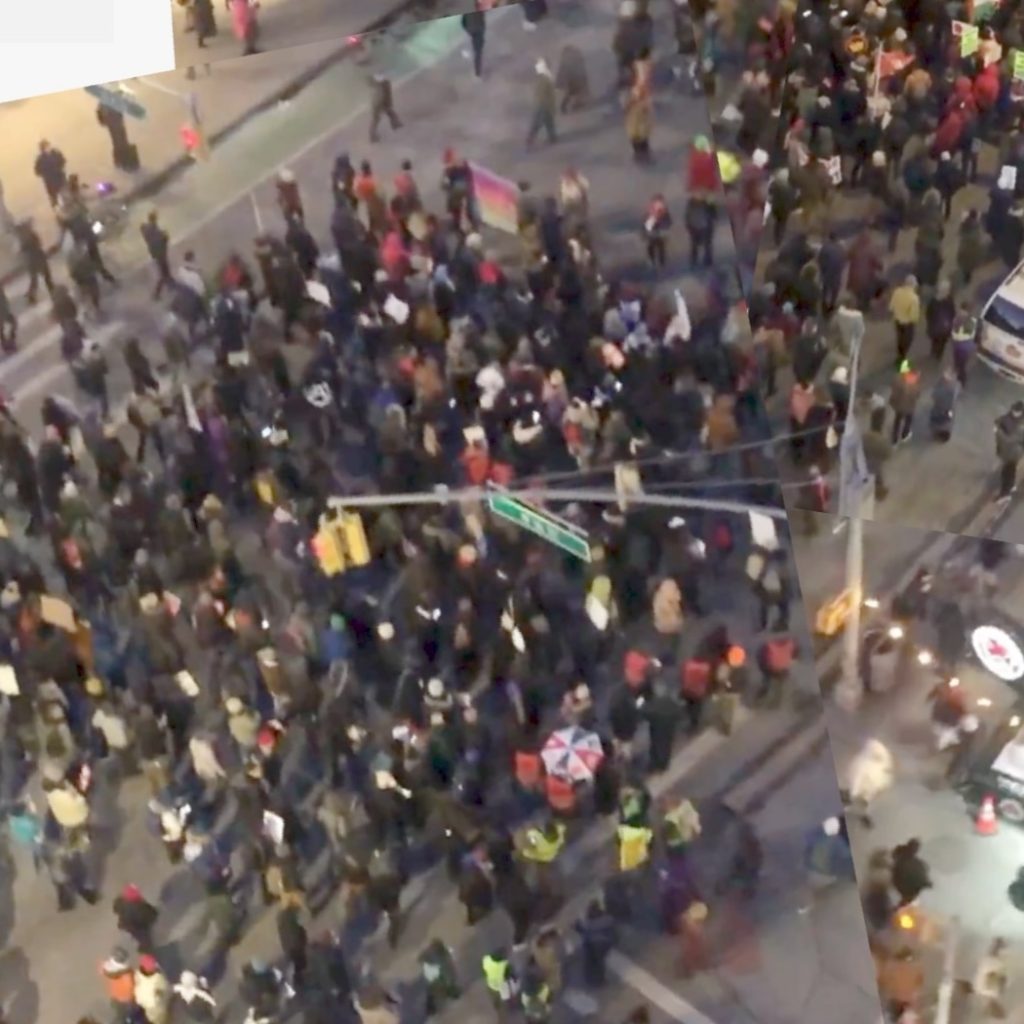
    In some areas of New York City, the off-site comms team can use the city’s public traffic cameras to observe crowds and traffic at key intersections.

  • Meet Your Neighbors, June 11

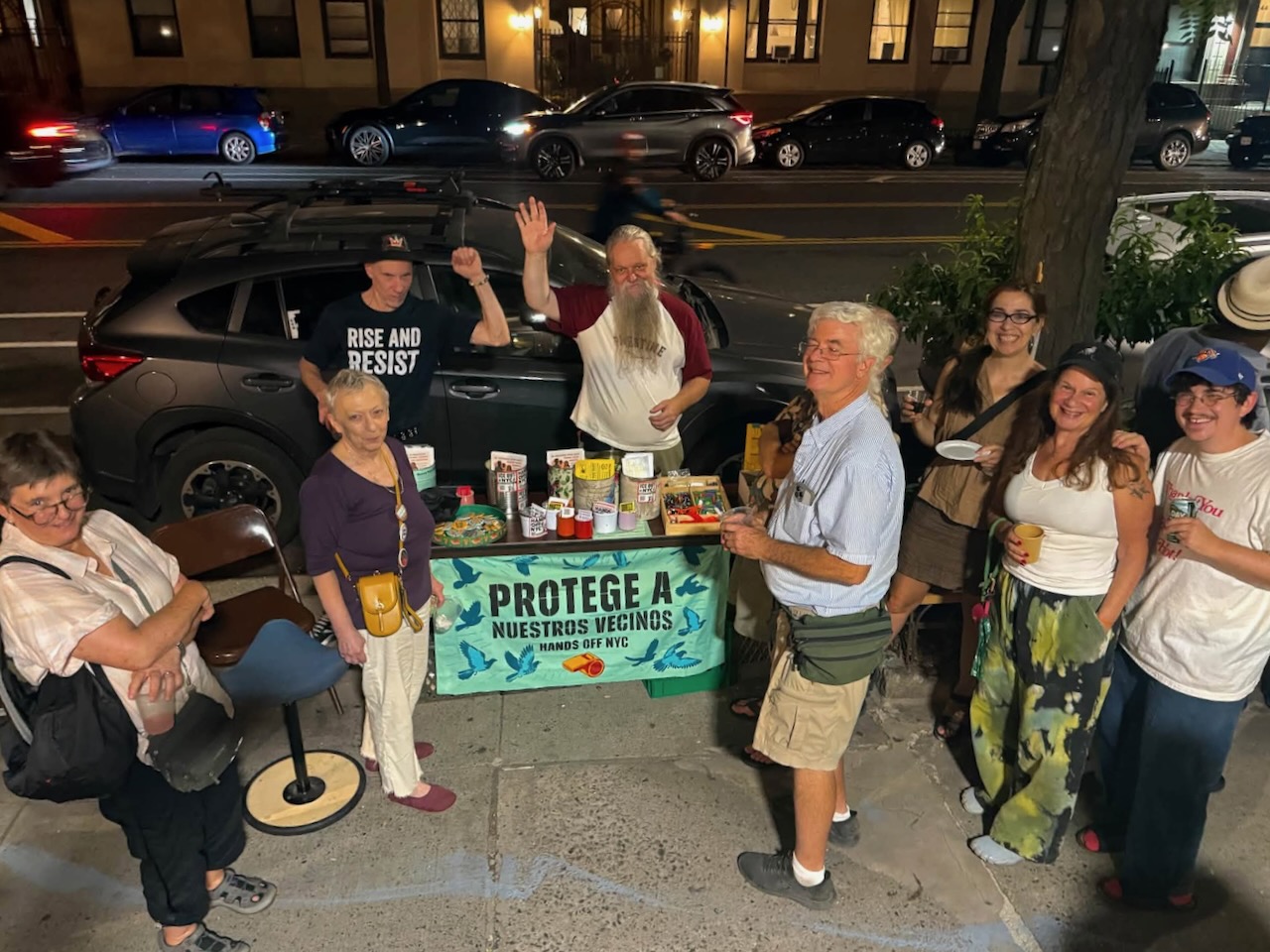
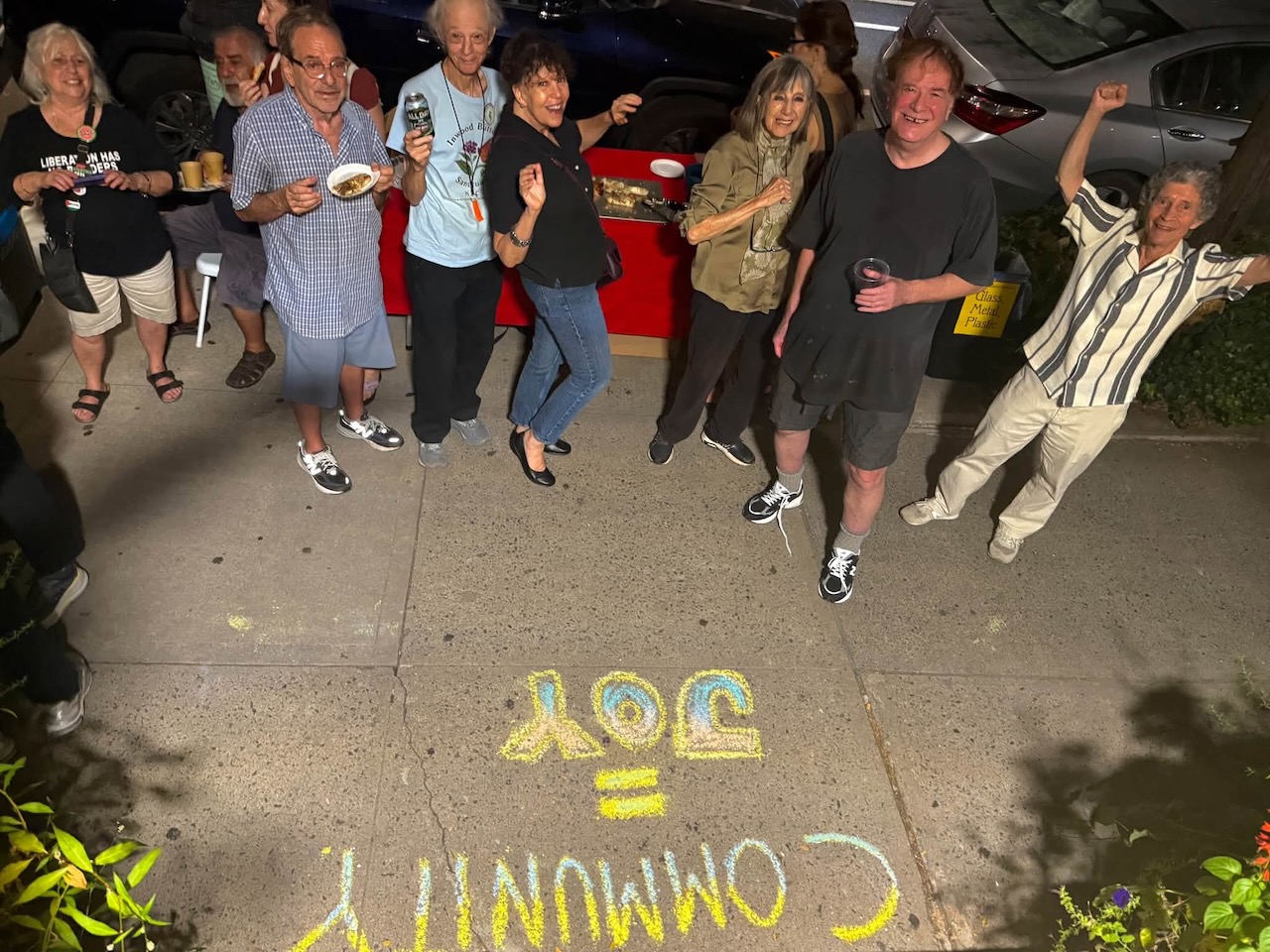
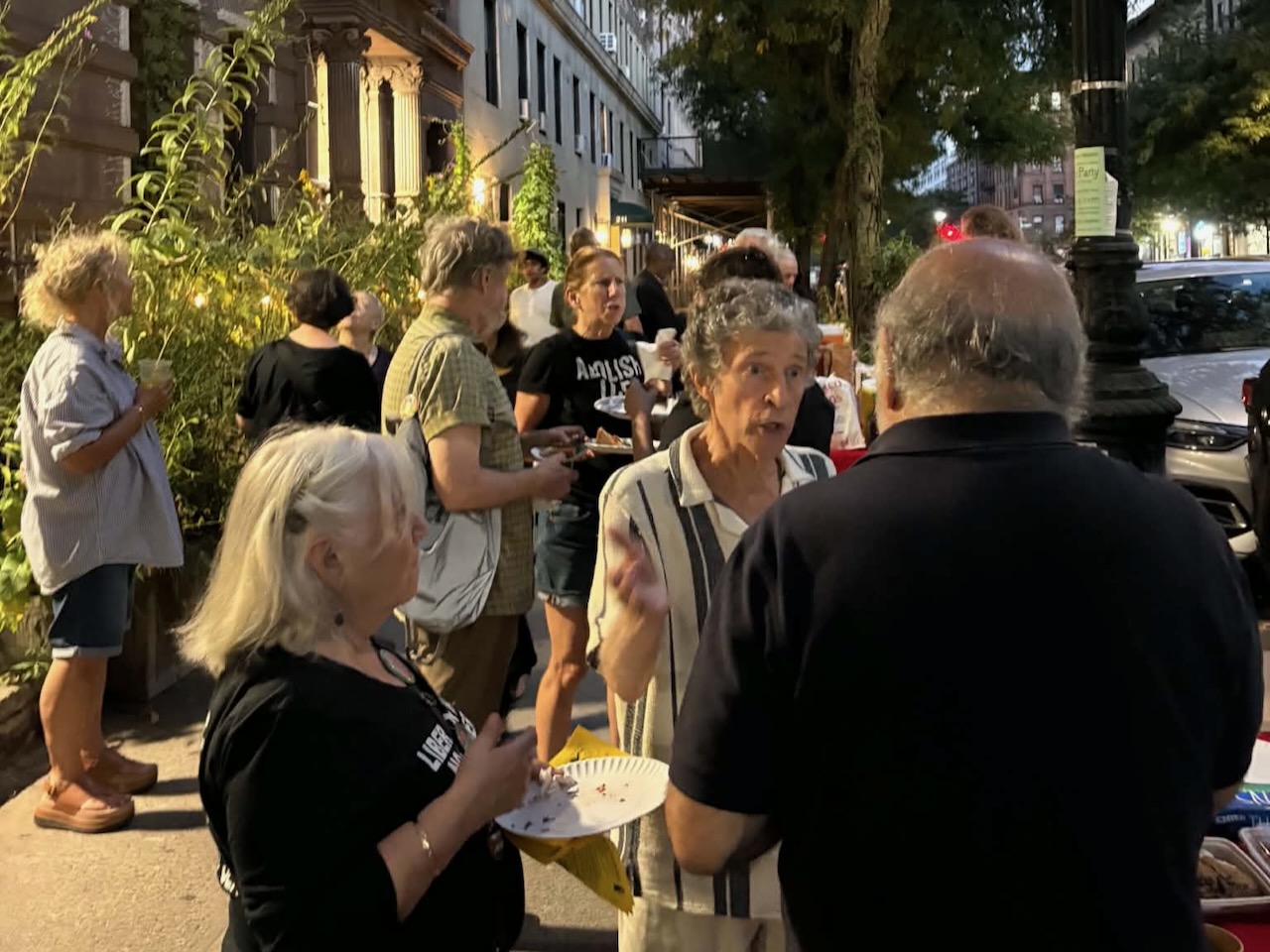
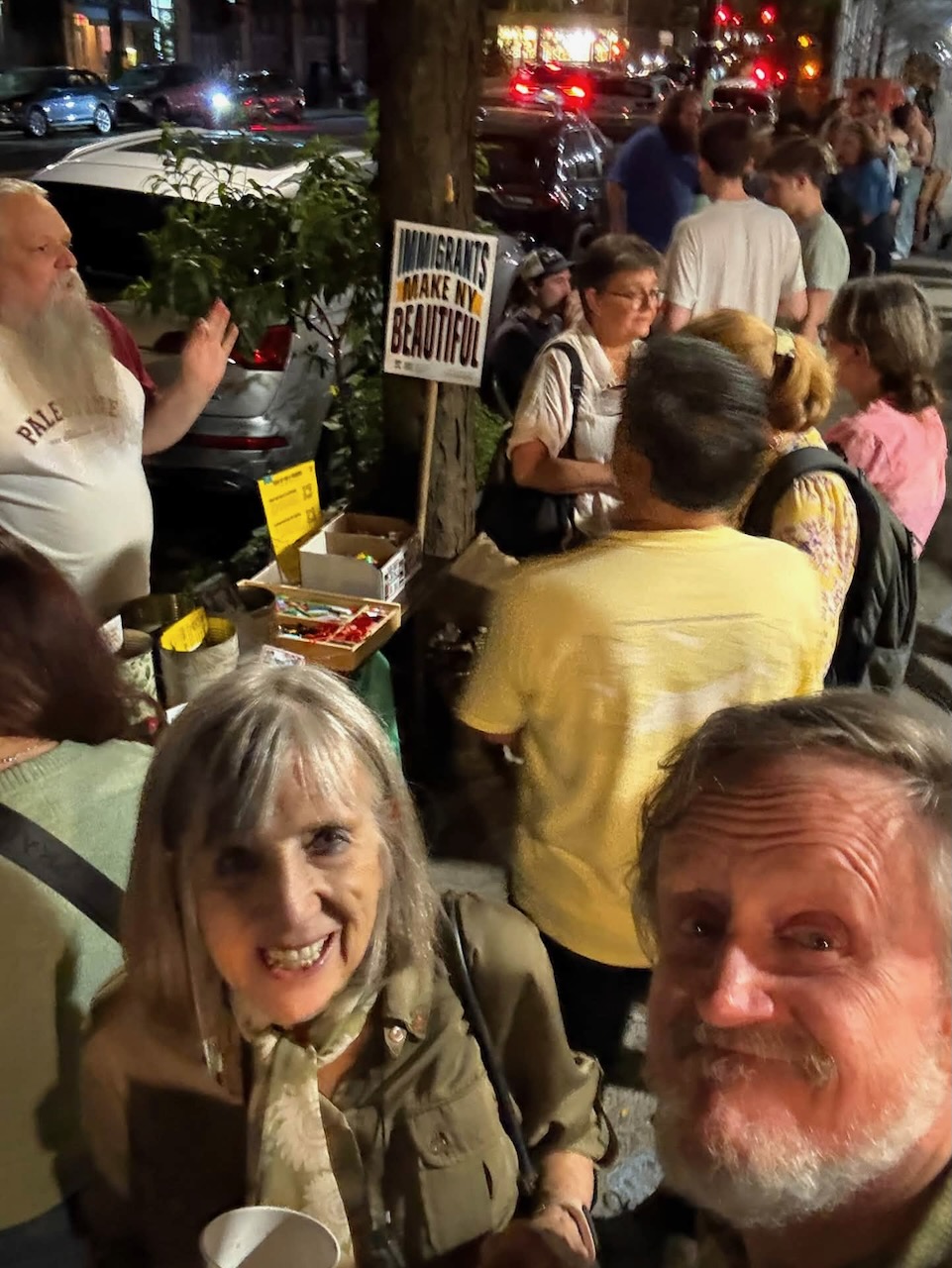
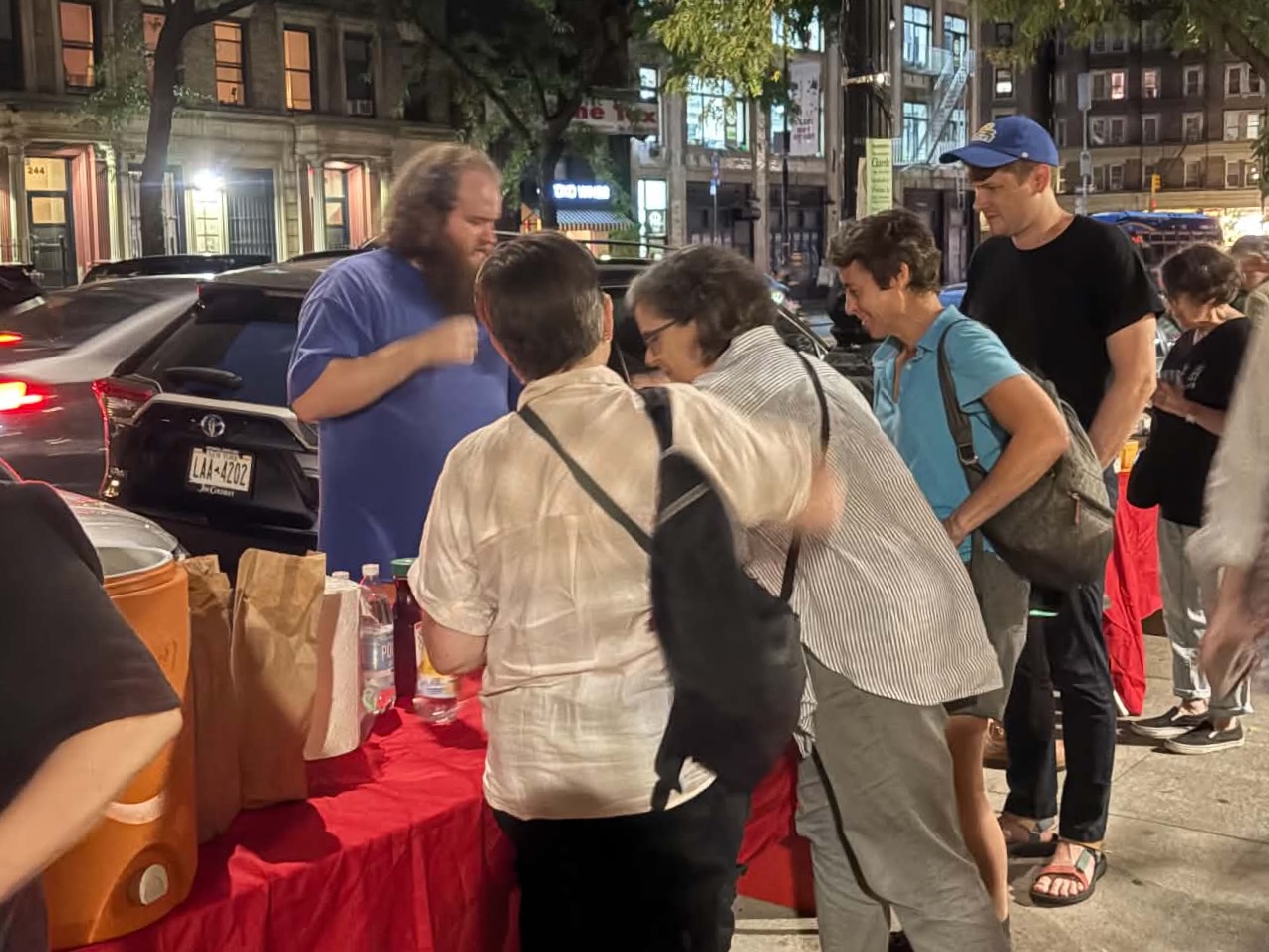
    With the coming of summer, we figured it was time for another hyper-local social gathering — just a couple dozen neighbors, some seasonal fruit punch, and information about local progressive candidates.

  • Checking for Street Closures

    When planning a protest in New York City, it’s a good idea to check your intended location for other events on the same date, so you don’t try to march a thousand people down an avenue only to discover that there’s a street fair happening along the way.

    Unfortunately, New York is so big that there’s no single comprehensive calendar of events, so you’ll need to check a few different sites — and even then, you can’t be sure you’ve found them all.

    The first place to check are these official city listings:

    You can also check for street fairs and cultural festivals on these public websites, each of which seems to have a different selection of events:

    As the date approaches, you might also want to check for last-minute traffic updates:

  • Flashback: Marshaling at May Day in 1937

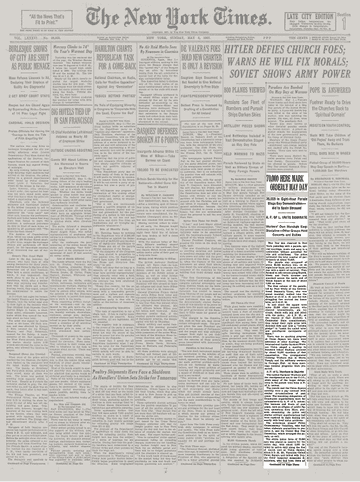
    A fellow marshal recently shared a New York Times article from 1937 which includes a discussion of the use of marshals as a new experiment in that year’s May Day march:

    May Day was observed in New York yesterday with a parade, special meetings, music and song in a celebration without precedent for size and orderliness. […]

    The order was hailed by the May Day committee as a masterpiece of “workers’ discipline.” As an experiment, the committee had obtained police sanction in providing its own corps of marshals. Identified by red arm bands, the marshals kept lanes open, crowds back and performed other such police work.

    Time after time as the marchers filed through a fifteen-foot lane in the crowd at the north end of the square, the announcer who was calling out the designations of various local unions through loudspeakers asked the spectators to fall back and make the lane wider. “Let’s show that workers maintain discipline,” his voice boomed again and again. “We don’t want mounted cops to push us back. Let’s push back ourselves and show worker discipline.”

    Thereupon the marshals, girls in white sweaters and men in white shirts, would push with might and main, the crowd would give a few feet and a little later reclaim the given space. The police watched and grinned and every one seemed pleased.

    There are some other fascinating details in here that make it worth reading the entire article:

    Page A1 of the May 2, 1937 issue of The New York Times, “70,000 HERE MARK ORDERLY MAY DAY; 35,000 in Eight-Hour Parade Stage Gay Demonstration […] Workers’ Own Marshals Keep Discipline […]
  • Mapping the Crowd at No Kings 3

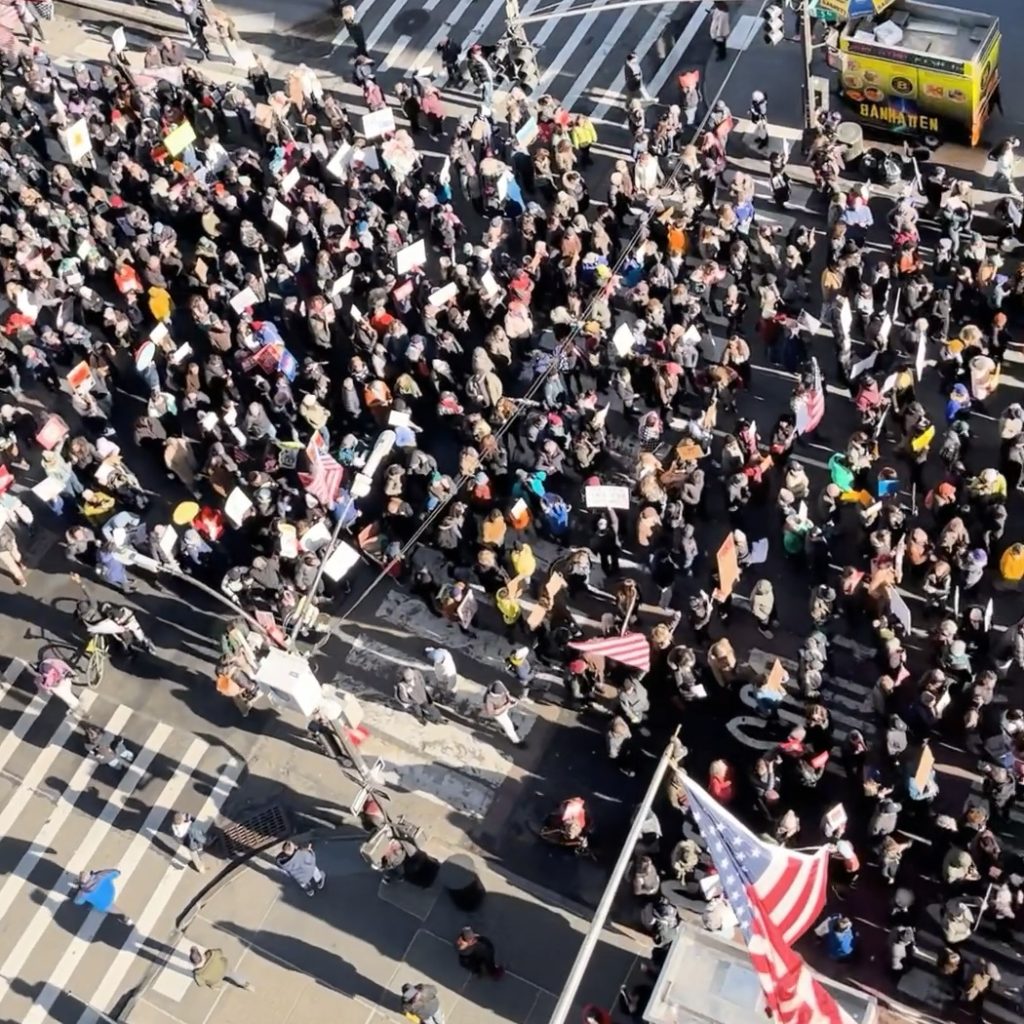
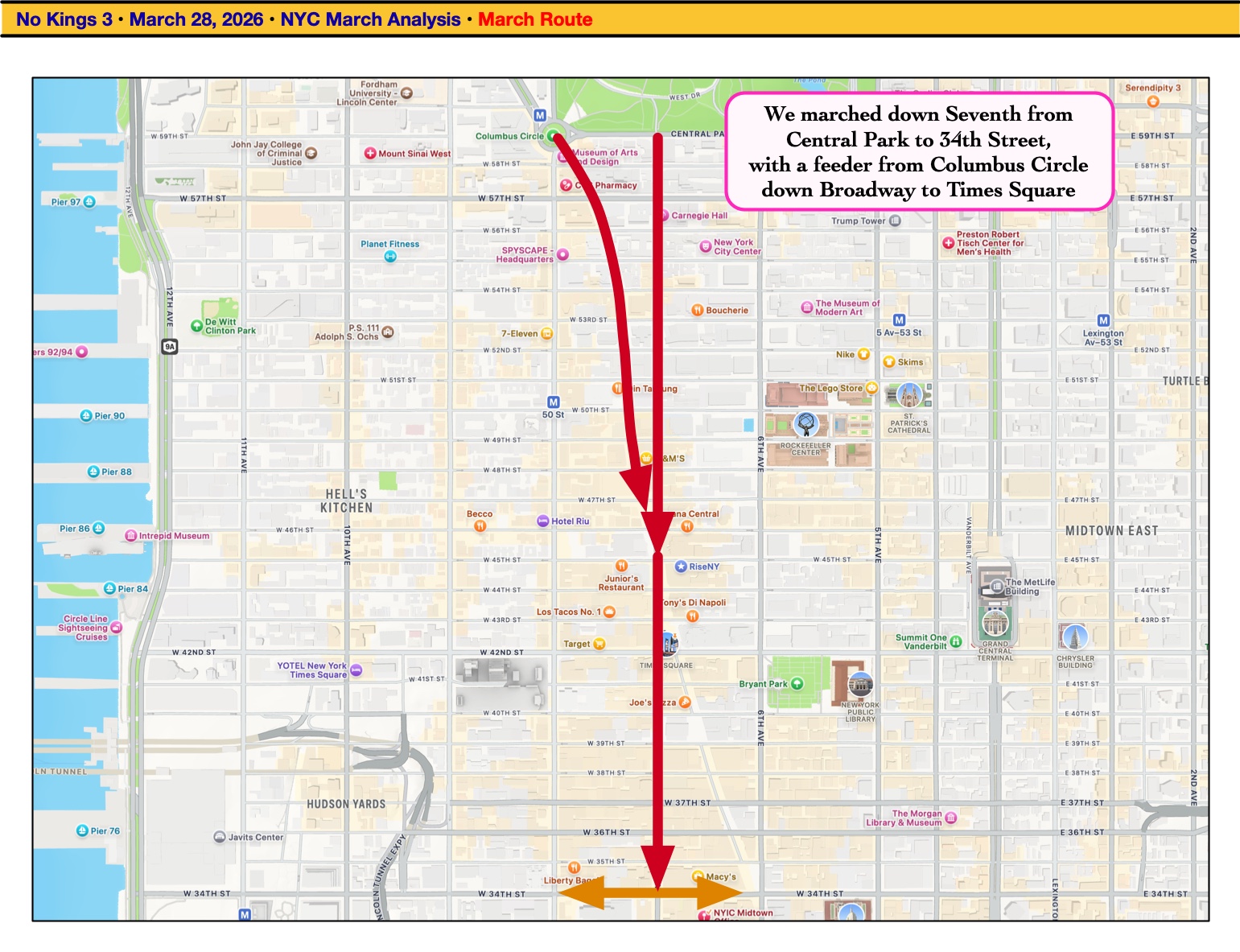
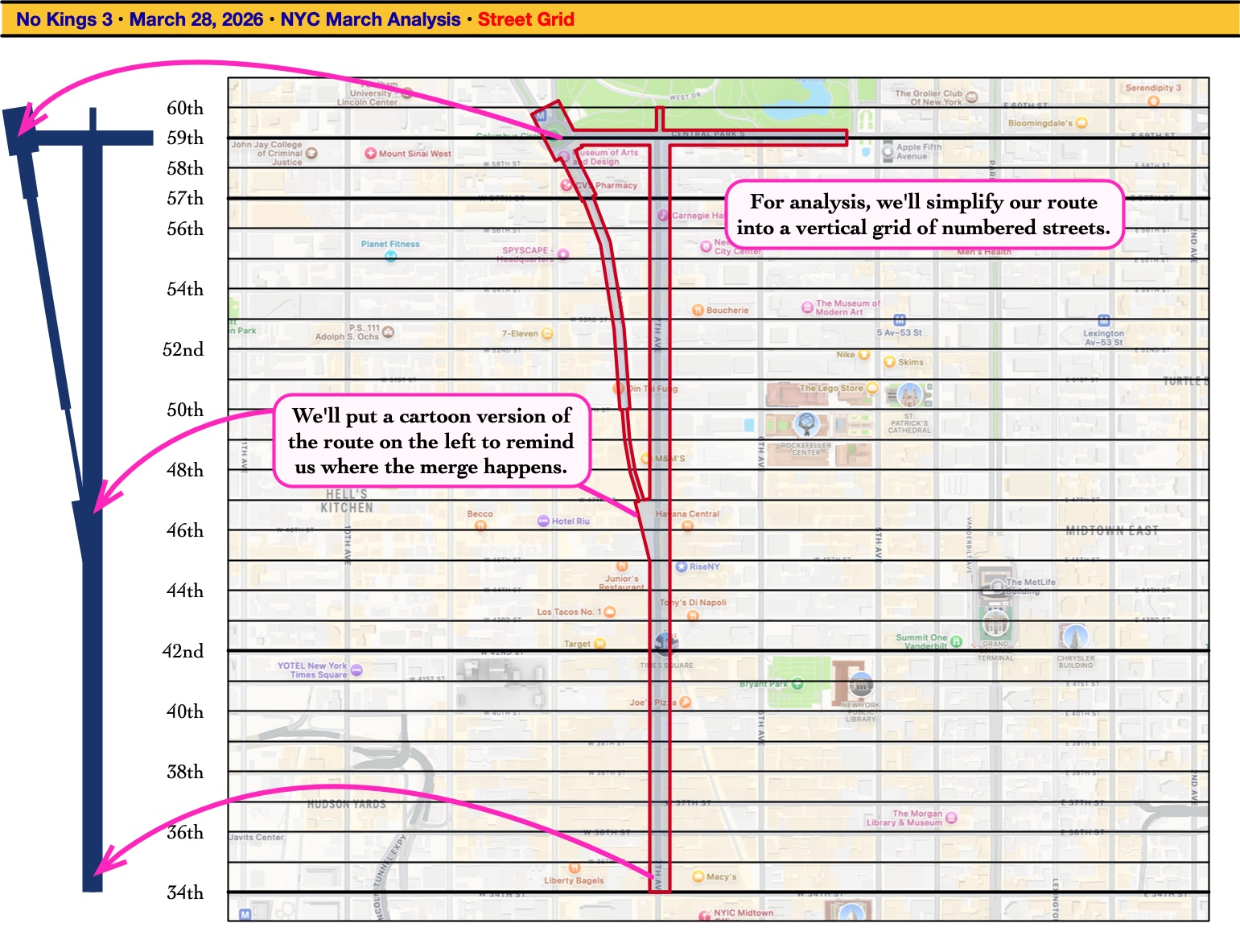
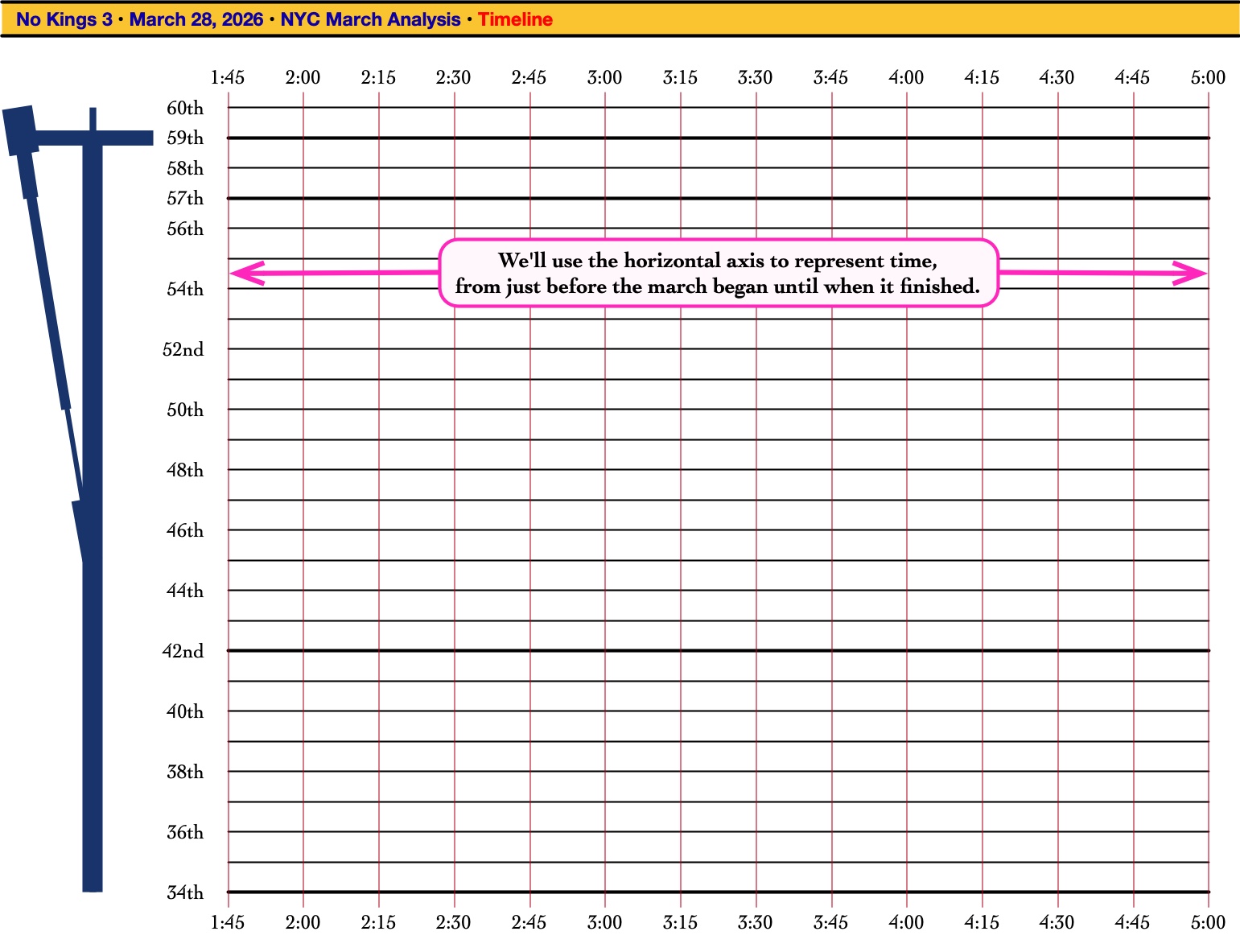
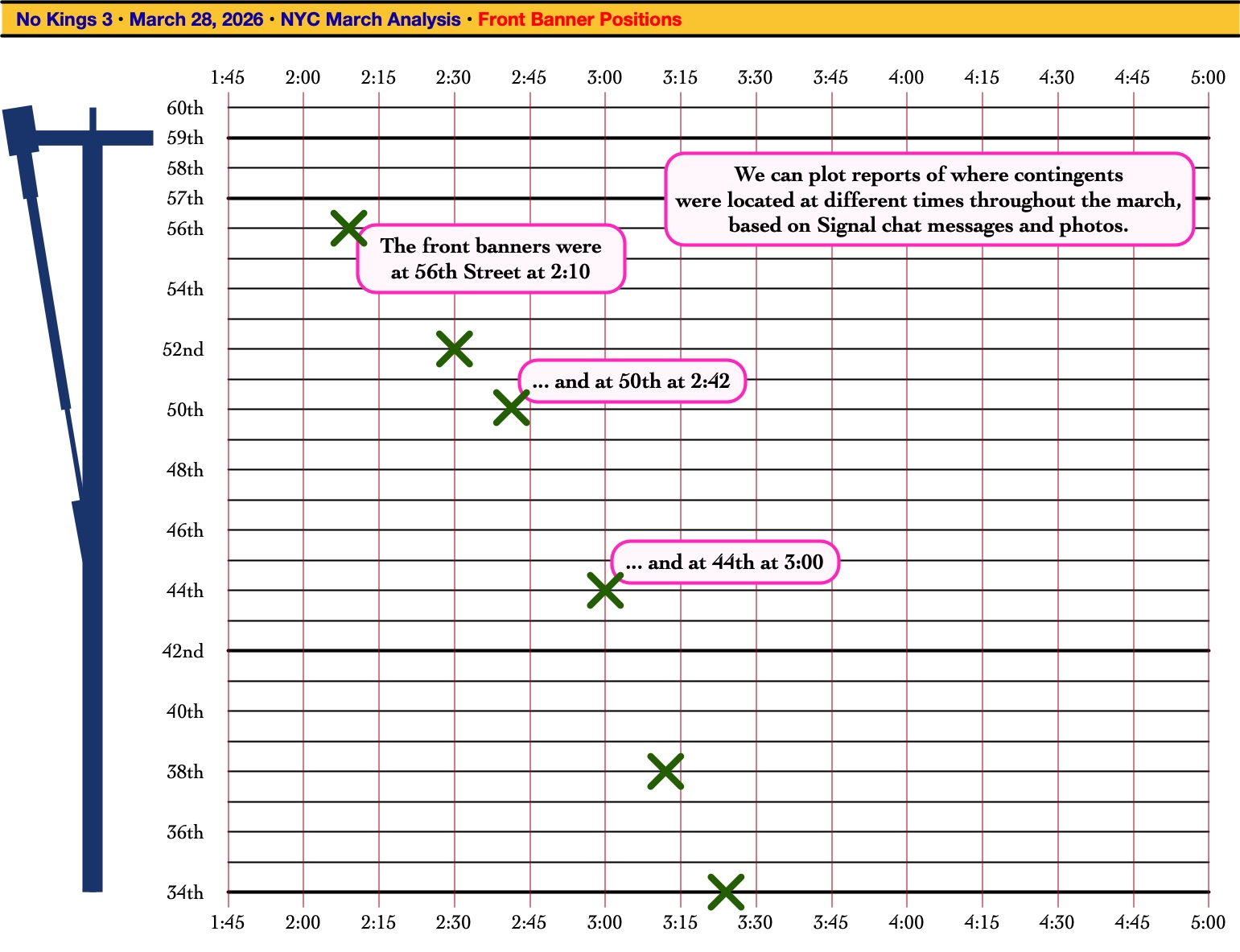
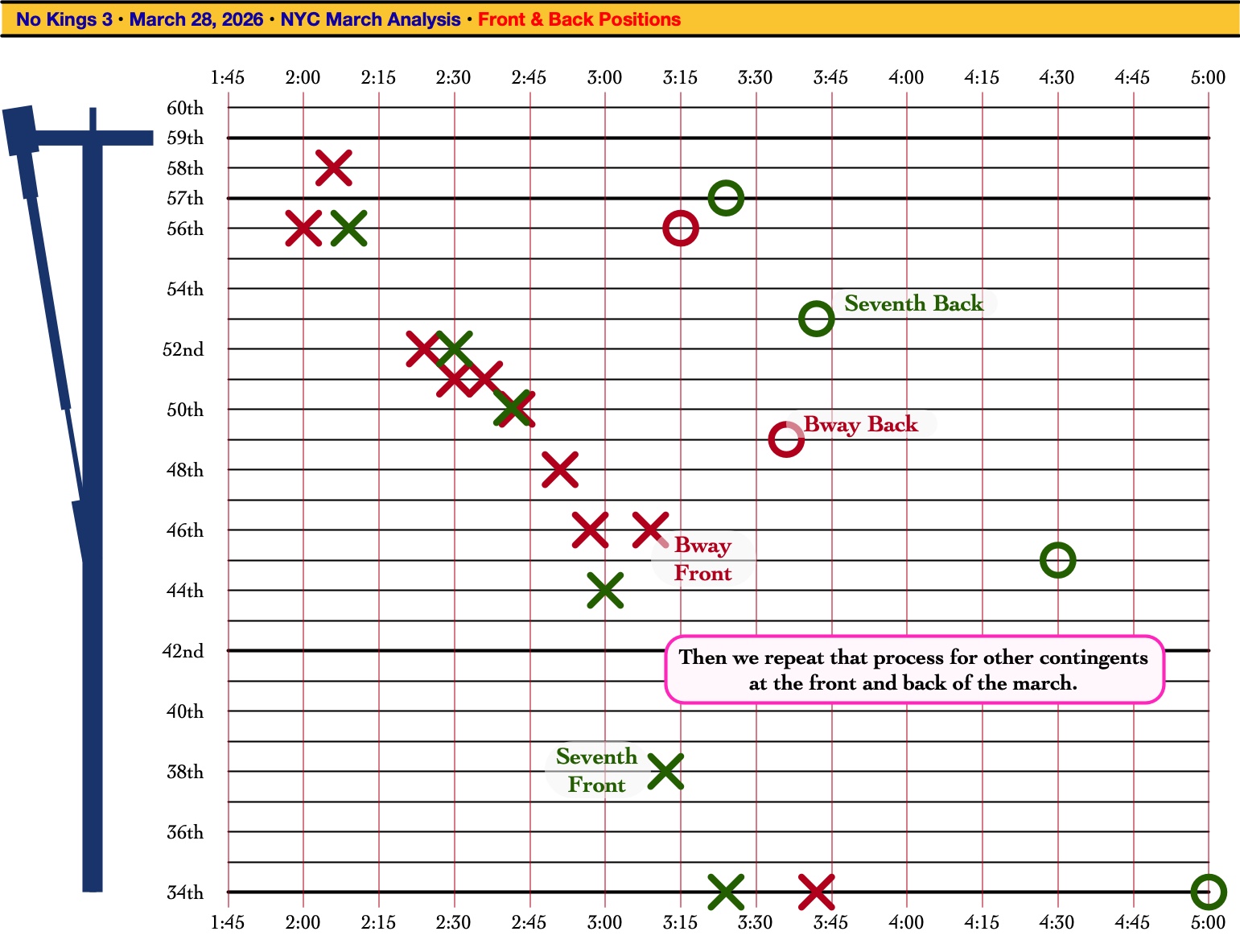
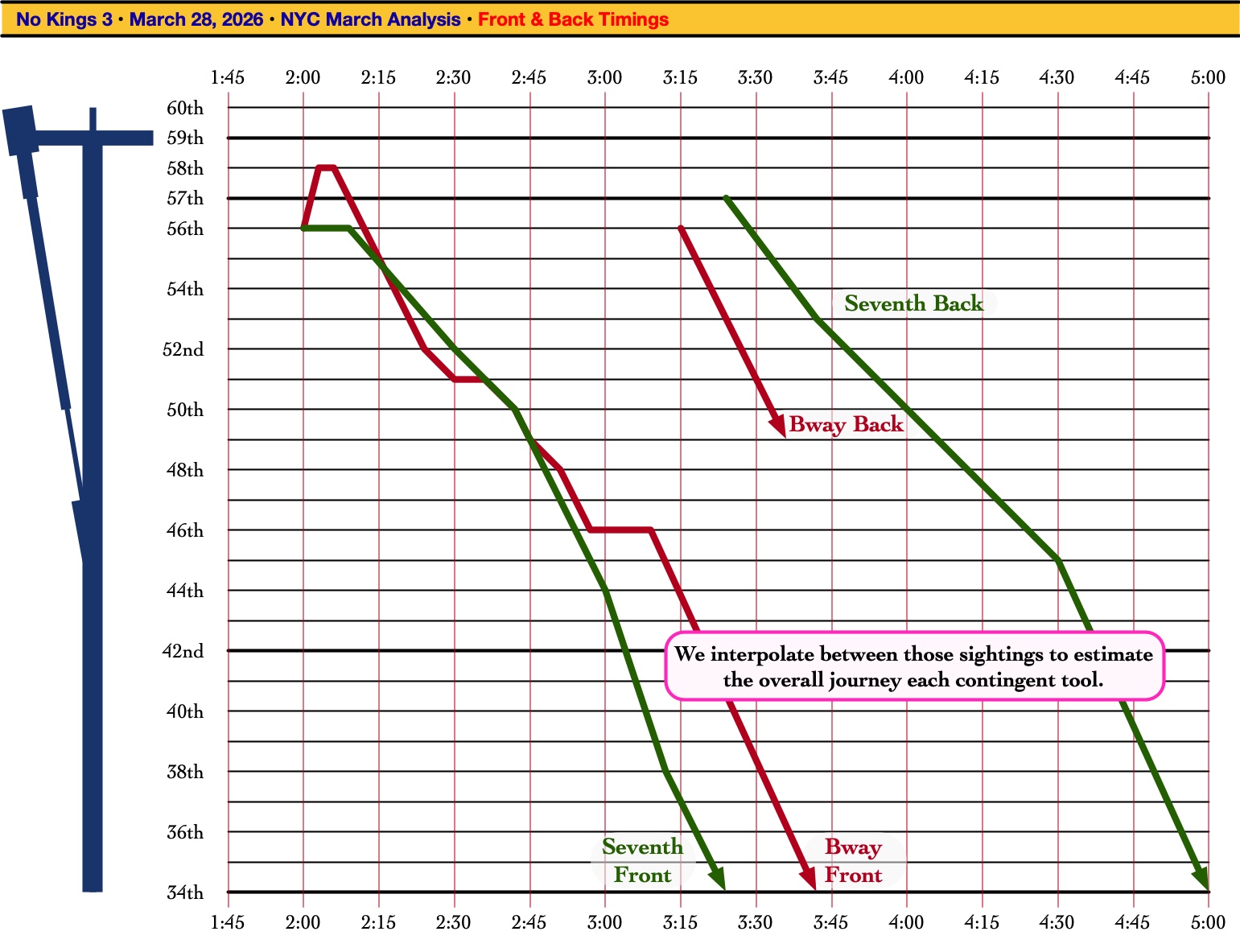
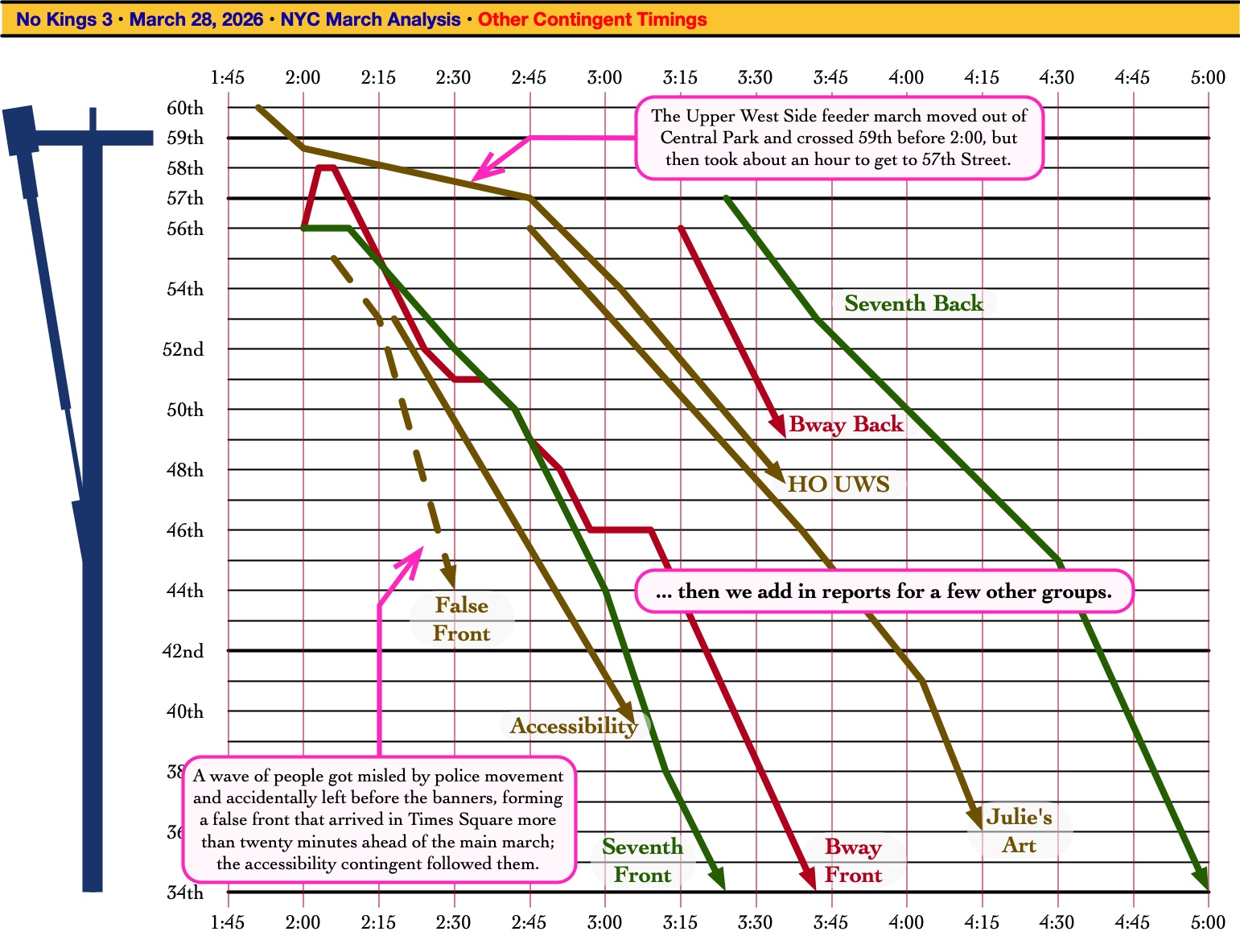
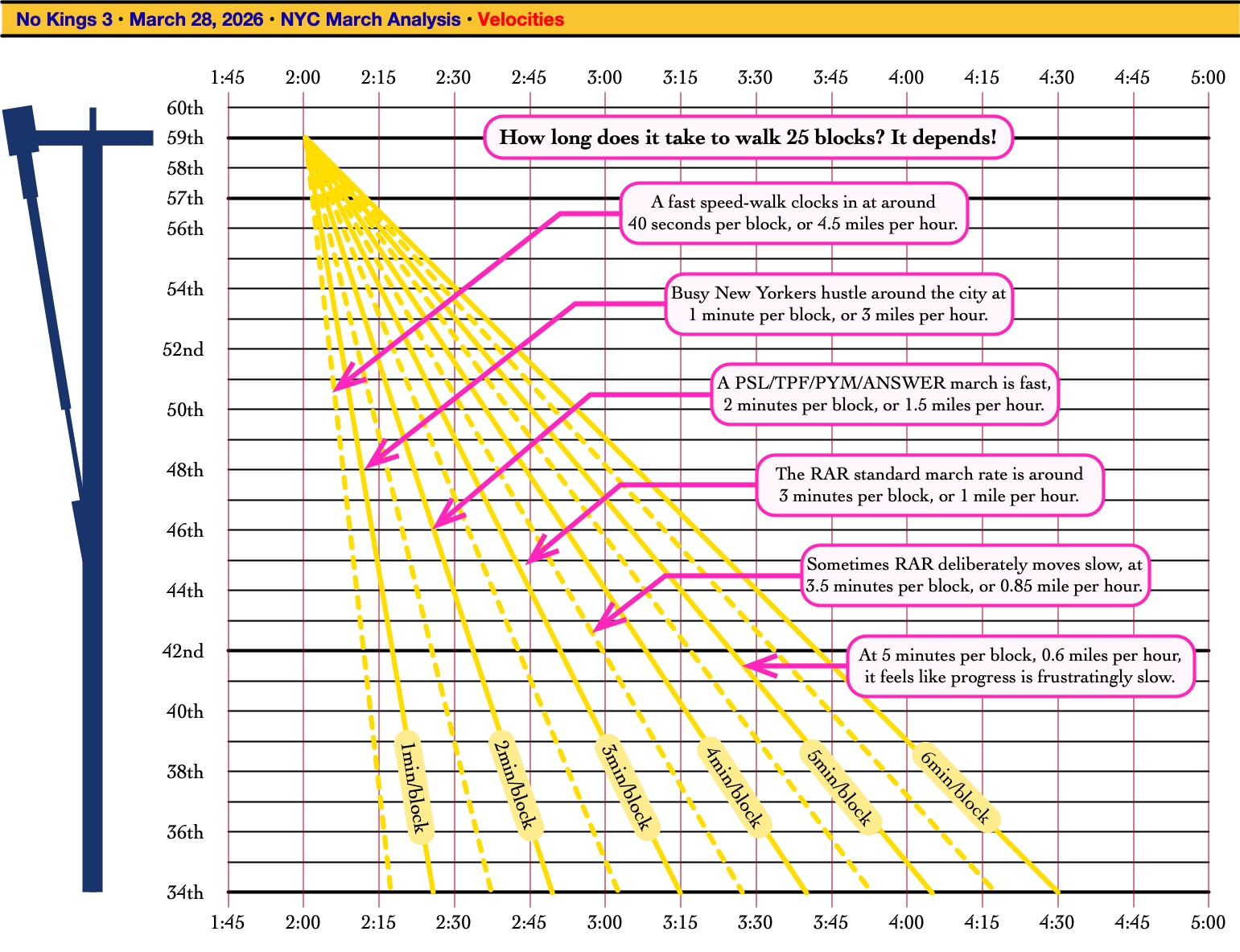
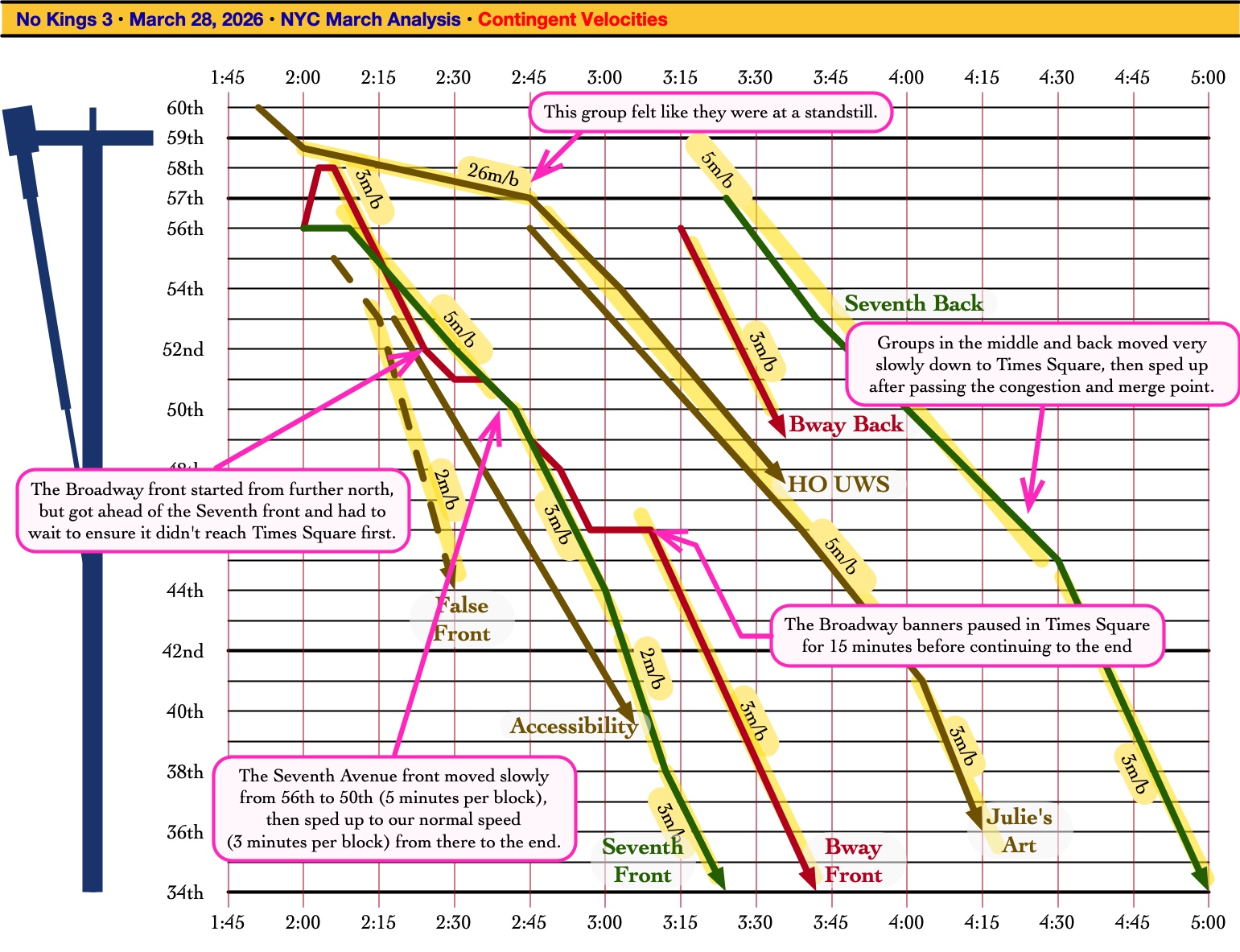
    I made a series of diagrams to help record and understand the extent and progress of the crowd at the No Kings 3 march in New York City.

    The charts show how quickly several contingents were able to move along the route, including ones at the front, middle, and back of the march.

    (The timeline data is based on Signal chatter and overhead photographs, and I’m sure it contains many small measurement errors, but I think the overall shape is accurate.)

    Observations

    The charts help to visualize a few notable elements of the march dynamics:

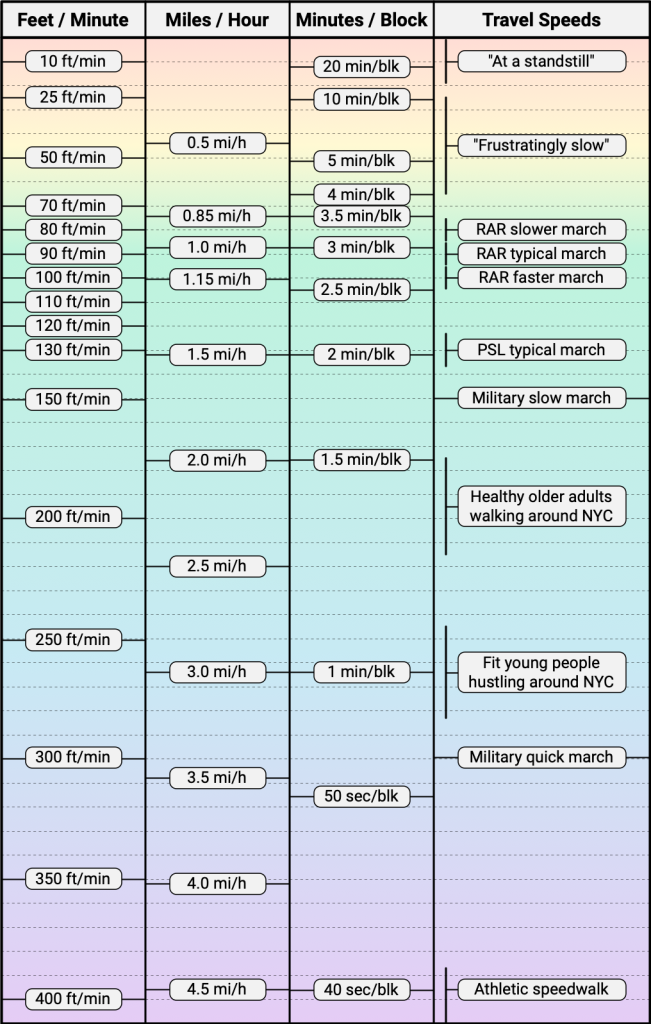
    • The Seventh Avenue front moved very slowly from 56th to around 50th (around 5 minutes per block), due to severe media congestion around celebrities marching with the front banner, then sped up to our “normal” speed (around 3 minutes per block) after they left the march.
    • The Broadway front started from further north, but got ahead of the Seventh Avenue front and had to wait to ensure it didn’t reach Times Square first — then, once in Times Square, it paused there, as scheduled to allow space between the two sets of banners.
    • A wave of people who had gathered along Seventh Avenue south of 57th Street were misled by police movement ahead of the march and accidentally left before the front banners, forming a false front that arrived in Times Square more than twenty minutes ahead of the main march. The accessibility contingent got caught up in this, and remained ahead of the lead banners until 42nd Street.
    • Groups in the middle and back moved very slowly down to Times Square, then sped up after passing the congestion at the merge point.
    • When the march was about to step off at 2:00, between a third and half of the crowd was south of 58th Street.
    • Marching at half speed (5-6 minutes per block) can be frustrating — but it’s better than barely moving at all while waiting to march.

    Diagrams

    The charts are available as a PDF file and also attached below; you can click to enlarge.

  • William Whyte’s “Social Life of Small Urban Spaces”

    William Whyte was a sociologist whose studies came to include public spaces in American cities, especially plazas and parks here in New York City. Most of his work isn’t directly applicable to the rallies and marches we organize, but the combination of observation and attempting to predict which interventions will improve people’s experience does have some familiar echoes.

    Whyte’s research is documented in a book and film, which is preserved in several different versions shown in the years of the late 1970s and early 1980s. One version of the film is on Daily Motion, and the book is at the Internet Archive (free account required to read).

    You can find a capsule biography of Whyte at Wikipedia.

  • About Signal

    If you are getting involved in the world of New York City activists and organizers, you’ll need to get familiar with the Signal app, a secure text messaging app which is widely used in many segments of this community.

    • To get started, download Signal from your smartphone’s app store.
    • When you first use the app you will create a new account. You can use any name for your account; many people protect their privacy by choosing a nickname or using just their first name.
    • Once it’s set up on your phone, you can also use it on a desktop or tablet.
    • There’s a Getting Started guide on the Signal.org website.
    • This Signal User Guide from AboutSignal.com is also a helpful resource.
  • Immigration KYR Flyers

    You can print and share this PDF with information about the rights we all have when interacting with immigration agents.

    Click above for English and Spanish layouts as a double-sided half-sheet, or use this PDF for full-page versions in eight languages.

    The half-sheet versions of the flyers include additional links to two multi-lingual resources:

    • Get reliable legal information about immigration and protesting in New York City from Our City Our Rights.org. (16 languages)
    • Watch easy-to-understand videos about your rights when dealing with immigration agents at We Have Rights.us. (7 languages)
  • Whistle Distribution Flyers

    As part of local whistle-distribution efforts, community members hand out flyers explaining how drawing a crowd to observe and document immigration enforcement efforts can help to check their worst excesses.

    There are a variety of different designs for these flyers floating around, but I wanted one that included all of the relevant information for my neighborhood on one sheet, including the basics of whistle brigades and ICE watching, information about the New York City rapid-response hotline, links to Hands Off NYC for trainings and mobilizations, and to Our City Our Rights for legal information.

    I drew inspiration from a bunch of different sources to come up with a new version, which includes English and Spanish layouts as a flyer, a double-sided half-sheet, and a zine.

    Click for 6-page PDF.

    You’re welcome to print these for your own use, and to modify them as needed; for example, you could replace one or both of the links at the bottom with resources that are relevant to your community. (Use the free Aptos font if you want to match the existing style.)

    When printing, consider using colored paper, which makes the flyers look a bit more interesting. The below are printed on Astrobrights “Punchy Pastel” Mega Assortment ($20 for 625 sheets at Amazon, which is three cents per sheet), but any light / pale colors should work.

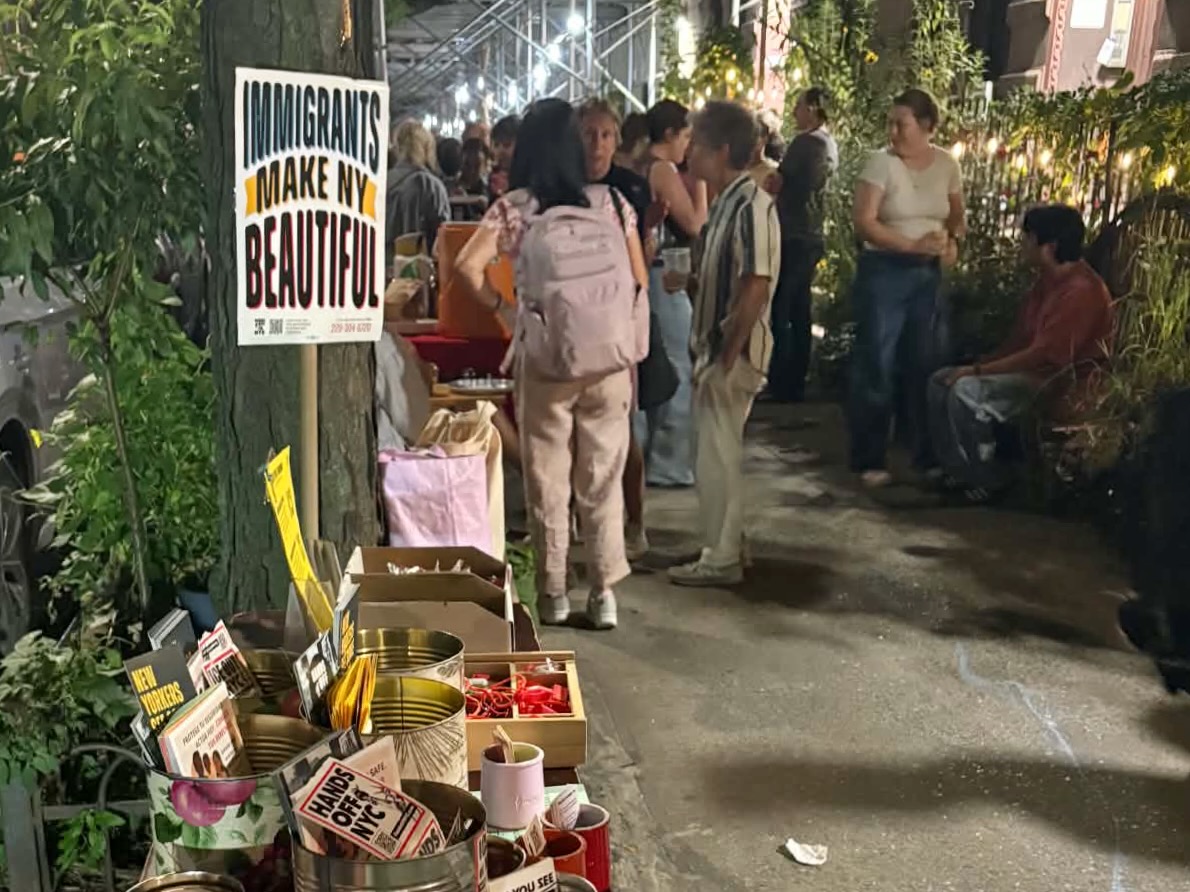
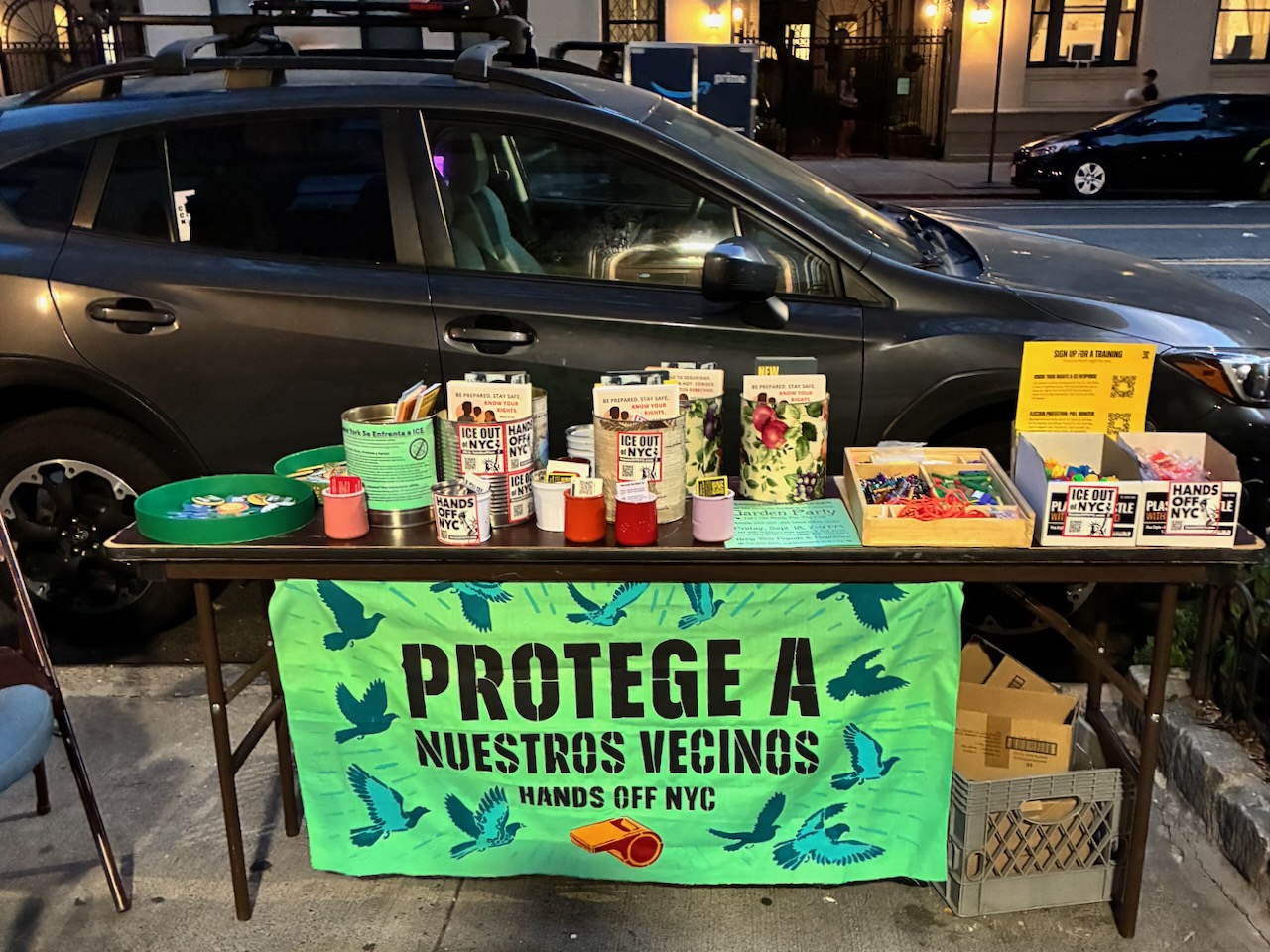
    I think that having a visually-interesting table helps to draw people in, which is why we use colored paper and prepare materials in a few different formats.

    I also try to give people a choice of multiple types and colors of whistles, in hopes that they feel it’s something they chose, rather than something they got stuck with.

  • About Whistles

    Whistles are being widely deployed as a community defense mechanism.

    We’ve distributed over a hundred two hundred and fifty four hundred and fifty a thousand whistles so far, along with fliers and zines from HandsOff NYC, Pilsen Arts Community House, and Megan Piontkowski.

    Sample Products

    We selected a small style of whistle that could be easily attached to a keychain, in hopes that people would to be more likely to carry them every time they left the house.

    These are manufactured in bulk in China, and are available via Amazon, Alibaba, and similar outlets under many different sellers’ names, often described as “Emergency Whistle with Keychain.”

    The price per piece varies a lot, depending on the volume and the seller, as does the delivery timeframe, from 6 for $6 (Amazon B0CYZWCWC7), to 50 for $10 (Amazon B0DZBQ1JKZ), to 105 for $24 (Amazon B09V85CMYR), to 200 for $31 (Amazon B0F3D8NGTC).

    We’ve gotten three four different packages so far, each from a different seller, but the actual whistles seem to be completely identical, so it seems like these are all coming out of the same one or two factories and just being resold under different brand names — whichever one you choose should be fine.